MODULE 03 / DOSAGE RESEARCH CONTEXT
Dosage: Research Context Record
A structured record of the dose ranges, routes, and study durations used in published BPC-157 preclinical research.
- Identify the dose ranges documented in published rodent BPC-157 studies across major tissue systems.
- Understand the seven routes of administration that have appeared in the preclinical literature.
- Understand the pharmacokinetic profile — half-life, bioavailability, and metabolic clearance — as measured in rat and dog studies.
- Understand why the oral bioavailability data does not contradict evidence of oral efficacy in rodent models.
Module 03 — what this page is and is not
This page records what doses were used in published BPC-157 animal studies — the quantities, routes, and durations that appear in the primary literature. It is a research literacy resource, not a dosing guide. BPC-157 has no approved human indication and no validated human dosing protocol. The dose values below are rat and dog figures from specific experimental models. They cannot be extrapolated to any other context. The most common rodent systemic dose across the literature is 10 micrograms per kilogram per day via intraperitoneal injection, and the same compound is active at doses seven orders of magnitude lower (10 picograms per kilogram) in some studies — an unusually wide range that reflects animal-model findings, not human-relevant dosing guidance. Commercial purity and potency vary and are not independently verified outside formal studies [16].
Scope and Framing
This page is a research-context dosage record. It documents what was administered in published studies, at what quantities, via what routes, and for what durations. This information is presented for informational and research-literacy purposes only.
BPC-157 is not approved for human use by the FDA, EMA, or any other regulatory authority. The dose values below are reported exactly as they appear in the primary literature for rodent and in vitro models. They do not constitute dosing guidance for any purpose, and no dose recommendation for human use is possible from this literature.
The 2026 review by Yuan et al. notes that 'inconsistent preparation standards across commercial suppliers create purity and potency uncertainties' that further complicate any attempt to extrapolate from the published preclinical literature to any other context [16].
Dose Ranges in Published Rodent Studies
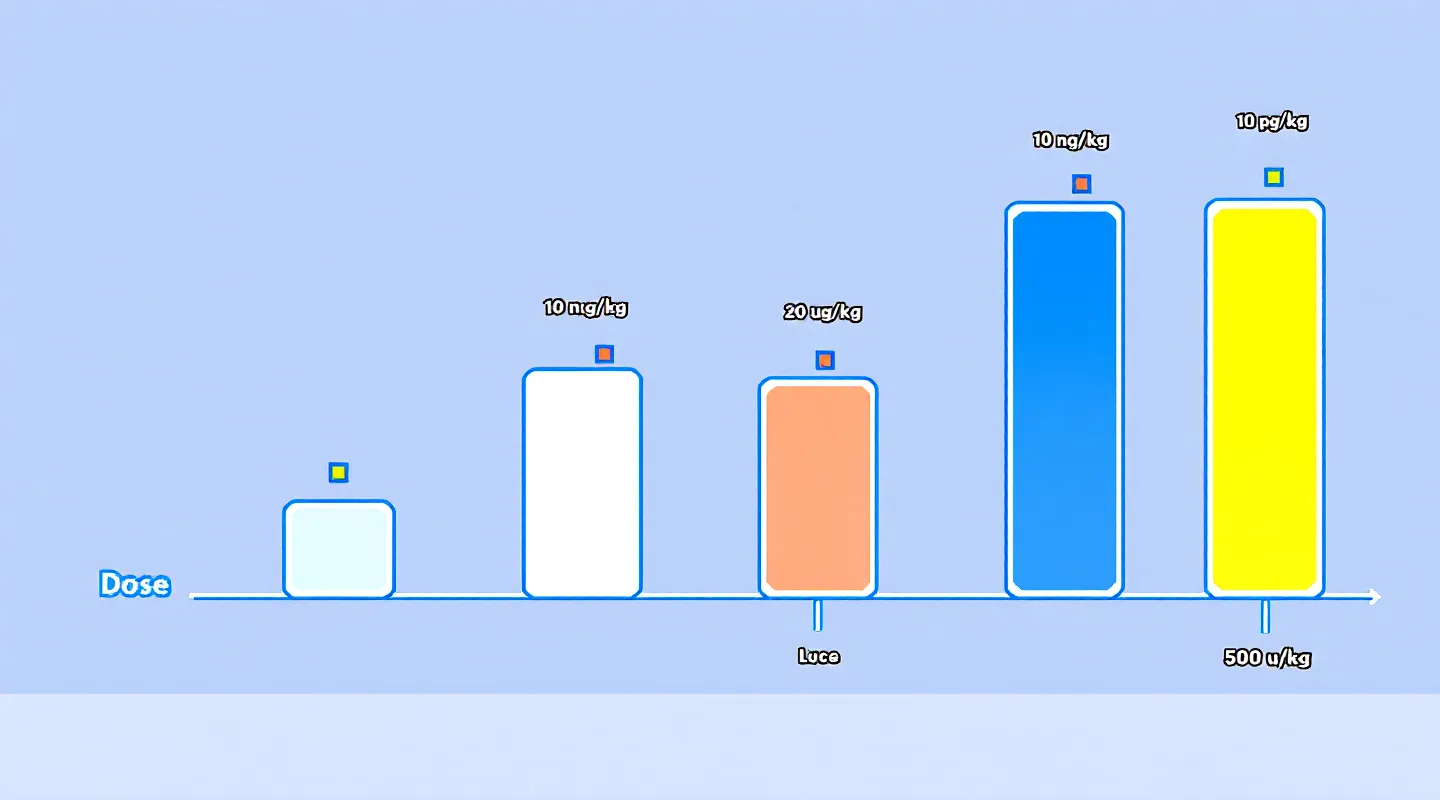
Published BPC-157 rodent studies span an unusually wide dose range — seven orders of magnitude — and consistently report active effects at the low end of that range. The following is a structured summary of doses documented in the primary literature reviewed on this site.
10 μg/kg/day intraperitoneal. The most common systemic rodent dose. Used in the wound healing studies by Seiwerth et al. (2021), the Achilles tendon studies by Krivic et al. (2006), the pulmonary hypertension study by Udovicic et al. (2021), the fistula study by Vukusic et al. (2024), the quadriceps reattachment study by Matek et al. (2025), and others [2][4][8][12][15]. Active in all tissue systems studied.
10 ng/kg/day intraperitoneal. Effective in the Achilles tendon model, pulmonary hypertension model, fistula model, and quadriceps reattachment model alongside the 10 μg/kg arm. In the quadriceps study, both 10 μg/kg and 10 ng/kg via oral route produced comparable outcomes at 90 days [2][8][12][15].
10 pg/kg/day intraperitoneal. The lowest dose level tested systematically. Active in the Achilles tendon study and the wound healing study [2][4]. The 2025 pleiotropic review by Sikiric et al. confirms activity at this dose level in healing models and notes no lethal dose was identified at 2 g/kg IV or intragastric in mice — a therapeutic index that is, in rodent models, extremely wide [11].
0.1–0.5 μg/mL in vitro. The dose range used by Chang et al. (2014) in isolated rat Achilles tendon fibroblast cultures. Produced dose-dependent and time-dependent increases in growth hormone receptor expression, reaching up to sevenfold at the high end by day three [3].
200 μg/kg single intraperitoneal dose. Used by Perovic et al. (2019) in the spinal cord compression model. A 2 μg/kg arm was also studied. Both doses produced comparable motor recovery outcomes through 360-day observation [6].
20 μg/kg intraperitoneal. Used by Demirtas et al. (2025) in the lower-extremity ischemia-reperfusion model studying remote organ protection [14].
Pharmacokinetic dose range (rats). He et al. (2022) studied BPC-157 at 20–500 μg/kg intramuscular in rats for pharmacokinetic characterization. IV administration at 20 μg/kg was also used [10].
Pharmacokinetic dose range (dogs). He et al. (2022) used 6–150 μg/kg intramuscular and 6 μg/kg IV in beagle dogs for the same pharmacokinetic characterization [10].
Oral / drinking water delivery. Several studies have used an approximate concentration of 0.16 μg/mL or 0.16 ng/mL in rat drinking water, yielding approximately 12 mL intake per rat per day as a continuous oral exposure model. This route was used in the pulmonary hypertension study, fistula study, and quadriceps reattachment study [8][12][15].
Routes of Administration
Nine routes appear across the published BPC-157 literature. Most studies compare two or more routes within the same experiment.
Intraperitoneal (IP). The most common route in rodent studies. Used in the majority of systemic efficacy studies from the Zagreb group and in the 2025 remote organ protection study [1][2][4][5][6][7][8][14][15].
Intravenous (IV). Used in pharmacokinetic characterization studies by He et al. (2022) and in the human IV safety pilot [10][13].
Intramuscular (IM). Used in pharmacokinetic studies in rats and dogs [10].
Oral gavage. Used in the quadriceps reattachment study (immediate post-surgical gavage followed by drinking-water continuation) and in the wound healing study [4][12].
Drinking water (ad libitum oral). Used in the pulmonary hypertension, fistula, and quadriceps reattachment studies as a continuous oral delivery model [8][12][15].
Topical cream (1 μg/g). Used in the wound healing and burn model by Seiwerth et al. (2021) [4].
Local wound application. Used in the vascular occlusion and fistula studies [9][15].
Ophthalmic drops (2 pg–2 μg/mL). Used in corneal neovascularization models to study BPC-157's anti-pathologic-angiogenic activity [11].
Intragastric gavage. Used in the vascular occlusion studies [9].
Human routes documented in pilot studies. Intra-articular (knee injection, 14 patients), intravesical (bladder instillation, 12 patients), and intravenous (safety study, 2 volunteers at up to 20 mg total dose) [13].
Pharmacokinetics
The pharmacokinetic profile of BPC-157 was characterized by He et al. (2022) in both rats and beagle dogs across IV and intramuscular routes [10].
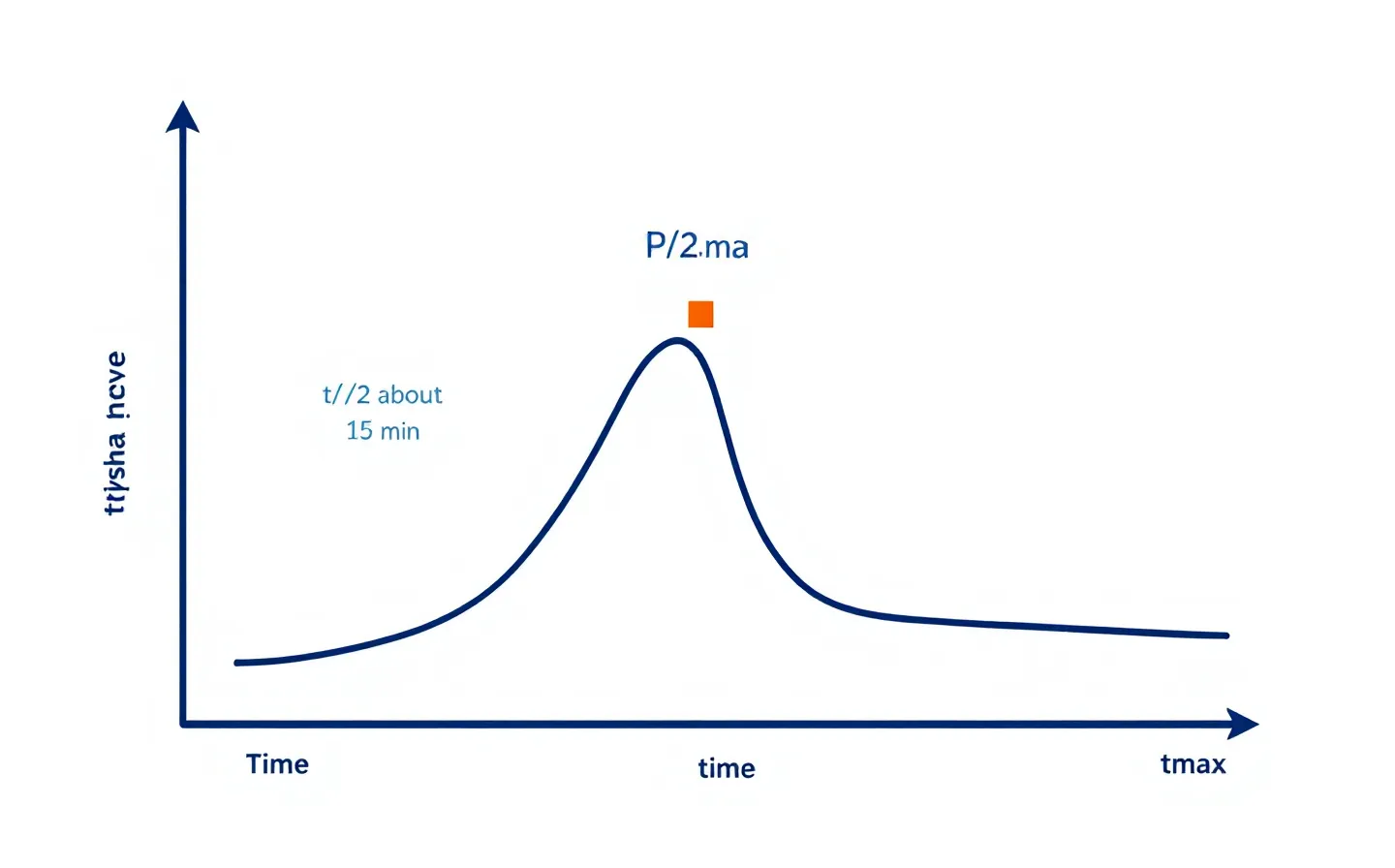
Plasma half-life. Following IV administration, BPC-157 has an elimination half-life of approximately 15.2 minutes in rats. In dogs, the IV half-life is shorter, approximately 5.3 minutes. These values indicate very rapid clearance from the plasma compartment — consistent with a peptide that is quickly metabolized into its constituent amino acids.
Intramuscular bioavailability. Bioavailability via IM injection was 14–19% in rats and 45–51% in dogs. The substantially higher dog bioavailability may reflect species differences in the rate of local proteolytic activity at the injection site.
Metabolic clearance. BPC-157 is metabolized into component amino acids. Clearance occurs via urine and bile pathways. He et al. (2022) confirmed linear pharmacokinetics — dose-proportional exposure — and no accumulation on repeated dosing [10].
Oral bioavailability and the apparent paradox. The pharmacokinetic data show very low oral bioavailability in rats, which appears at odds with the documented efficacy of orally administered BPC-157 in multiple rodent studies. The research community has not resolved this discrepancy definitively. BPC-157 was originally derived from a gastric protein and demonstrates resistance to gastric acid degradation — its original protein source is active in the gastric environment by design. Some researchers have proposed local gastrointestinal tissue effects that do not require significant systemic absorption to account for gut-targeted findings. For findings in tissues distant from the gut (pulmonary hypertension, quadriceps reattachment), the explanation is less clear and warrants further investigation.
Stability. BPC-157 has demonstrated stability in the gastric environment in animal studies. It is active orally in rodent models at very low concentrations — the drinking-water delivery route consistently produces detectable biological effects despite the low systemic bioavailability.
Half-life and Duration of Effect
The plasma half-life of approximately 15 minutes (rat, IV) represents the time for plasma concentration to decline by half after a bolus dose. Study durations in the published literature extend from single-dose protocols (Perovic et al. spinal cord study, Demirtas et al. organ protection study) to multi-month continuous dosing protocols (Matek et al. quadriceps study, 90 days of oral administration in drinking water) [6][12][14].
The short plasma half-life does not preclude sustained biological effects in the studies reviewed. This is consistent with receptor-level or gene-expression-level changes initiated rapidly after exposure — such as the Egr1 and Akt1 upregulation documented within 10 minutes of BPC-157 application in the Seiwerth et al. wound model [4] — that persist beyond plasma clearance.
No accumulation was observed on repeated dosing in the He et al. pharmacokinetic study, which is consistent with the rapid amino acid metabolism pathway [10].